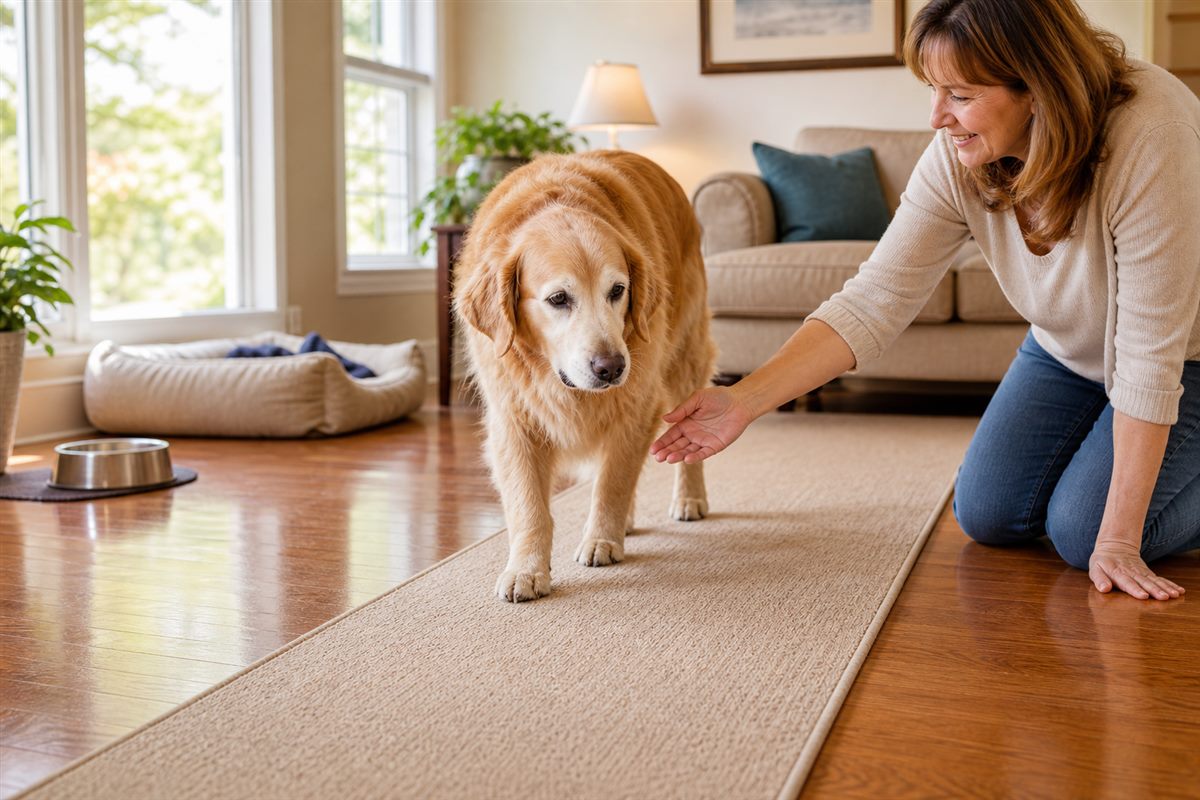
If your senior dog has started slipping on hardwood floors, they may not be lazy, stubborn, or afraid to walk. Smooth flooring can become difficult to navigate when aging affects strength, balance, joints, vision, or confidence.
The kindest first step is simple: give your dog a stable path through the home and arrange a veterinary check if the change is new, frequent, or painful.
Why Do Older Dogs Slip on Wood Floors?
A senior dog may struggle to grip a smooth floor for several reasons:
- Reduced muscle strength, especially in the back legs
- Joint stiffness or discomfort
- Arthritis or another orthopedic condition
- Long nails or excess fur between the paw pads
- Reduced balance, coordination, or vision
- Recovery after an injury or surgery
- Anxiety after a previous fall
Osteoarthritis can cause stiffness, gait changes, difficulty rising, reduced activity, and trouble using stairs or jumping. Cornell University College of Veterinary Medicine includes non-slip rugs and ramps among the lifestyle changes that may help dogs with osteoarthritis manage daily mobility.
Slipping is not a diagnosis by itself. A veterinarian can help identify whether pain, arthritis, weakness, a neurological problem, or another condition is contributing to the change.
How to Help a Senior Dog Stop Slipping
1. Create a Continuous Non-Slip Path
Place secure runners, rugs, or non-slip mats along the routes your dog uses most:
- Bed to water bowl
- Bed to the door
- Hallway to the family room
- Food area to the resting area
- The approach to stairs, ramps, or exterior doors
Avoid leaving large gaps of exposed hardwood between mats. A dog may stop at the edge if the next safe surface feels too far away.
Choose materials that:
- Stay flat without curling at the edges
- Do not slide when your dog pushes against them
- Provide traction while standing as well as walking
- Are easy to clean
- Have a low profile to reduce tripping
Test each mat yourself by pressing and pushing it with your foot before asking your dog to use it.
2. Keep Nails and Paw Hair Maintained
Overgrown nails can change how a dog places their feet. Excess fur between the paw pads may also reduce contact with the floor.
Ask a groomer or veterinarian to show you an appropriate nail length and safe paw-pad trim for your dog. Do not cut nails or fur aggressively, especially if your dog is uncomfortable standing.
3. Make Standing Up Easier
Place a non-slip surface beside your dog’s bed so all four paws have traction when they rise. Consider a supportive, low-entry bed that does not require stepping over a high edge.
If your dog repeatedly struggles to stand, speak with your veterinarian rather than relying only on a new bed or floor covering.
4. Reduce Unnecessary Jumping
Move frequently used items to the same level when possible. A stable, appropriately sized ramp may help some dogs reach a couch, bed, porch, or vehicle without jumping.
A ramp should be wide, secure, low enough in angle, and covered with a genuinely grippy surface. Introduce it gradually with calm encouragement. Never pull or force a frightened dog onto it.
5. Slow Down the Daily Routine
Give your senior dog time to stand, turn, and choose their footing. Avoid calling them excitedly across a slippery room or rushing them at doors.
Place food, water, and resting spaces within a comfortable distance. Small changes to the home can reduce both physical effort and fear.
What Should You Avoid?
- Loose towels or blankets that slide or bunch up
- Small mats that move under the dog’s weight
- Adhesives that may damage floors or expose pets to unsafe materials
- Paw products with unclear ingredients or unrealistic claims
- Forcing a dog to walk after they show pain or fear
- Assuming frequent falls are simply a normal part of aging
When Should You Call a Veterinarian?
Arrange veterinary care if slipping appears suddenly or is accompanied by:
- Pain, crying, or sensitivity to touch
- Limping or a noticeable gait change
- Difficulty standing up
- Dragging, crossing, or knuckling of the paws
- Repeated falls
- Weakness on one side
- Reluctance to walk, use stairs, or eat
- A recent injury or surgery
- Changes in behavior or bathroom habits
Seek urgent veterinary advice if your dog suddenly cannot stand, collapses, appears severely painful, or rapidly loses control of their legs.
The American Animal Hospital Association emphasizes that senior care may include environmental modification alongside medical, behavioral, and pain-management support. Home changes are helpful, but they should not replace an examination when a dog’s mobility changes.
A Safer Path Is an Act of Care
Your dog has walked beside you for years. As they grow older, a familiar hardwood floor may begin to feel uncertain.
You do not need to redesign the entire house in one day. Start with one secure path between the places that matter most. Watch how your dog moves, make adjustments, and ask your veterinarian for help when something does not look right.
Sometimes love looks like a rug that does not move, a bowl placed a little closer, and the patience to let an old friend walk at their own pace.
Explore practical aids for senior and recovering pets: Mobility & Recovery at Elongbuy Pet
Frequently Asked Questions
Why is my senior dog suddenly slipping?
Sudden slipping may be related to pain, injury, weakness, balance changes, or another medical problem. Add temporary traction and contact your veterinarian, especially if your dog is limping, falling, or struggling to stand.
What flooring is best for an old dog?
A secure, low-profile surface with reliable traction is usually easier than smooth wood or tile. Non-slip runners and rugs can create safe routes without replacing the entire floor.
Do dog socks stop slipping?
Some dogs tolerate traction socks, but fit, rotation, moisture, and comfort can be problems. Floor-based traction is often easier to maintain. Check your dog’s paws frequently if using wearable products.
Can long nails make a dog slip?
Long nails may affect paw placement and traction. Ask a veterinarian or groomer about safe nail and paw-hair maintenance for your dog.
Should I use a harness to help my senior dog?
A properly fitted support harness may assist some dogs with weakness or recovery, but it must distribute weight safely and should not cause chafing or interfere with urination. Ask your veterinarian for guidance if your dog needs regular lifting support.
Editorial Sources
- AAHA Senior Care Guidelines for Dogs and Cats
- Cornell University College of Veterinary Medicine: Osteoarthritis
This article is for general education and daily-care reference. It does not diagnose disease or replace veterinary advice.